The Spirit of the University: A Quest for Truth, Virtue, and Beauty — An Interview with Professor Ambrose King, Fifth Vice-Chancellor of CUHK
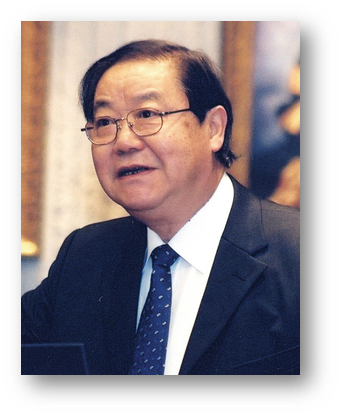
Professor Ambrose King Yeo-chi?is the fifth Vice-Chancellor of The Chinese University of Hong Kong (CUHK), a Fellow of Academia Sinica, and an internationally renowned sociologist, political scientist, and educator. His major works include?The Idea of a University,?From Tradition to Modernity,?The Modern Turn of China,?The Nightmare of the Modern Man, and the celebrated essay collections?Cambridge Musings,?Heidelberg Musings, and?Dunhuang Musings.
?
Foreword
The rise of artificial intelligence is reshaping our world and redefining the skills we value. For universities, which stand at the heart of nurturing talent, this presents a profound challenge. In the age of AI, whom should universities educate, and how? What role is left for the humanities? As Professor Ambrose King returned to campus to deliver a lecture on "The Role of Universities in China's Modernization,"?The Fairy Lake?Magazine was granted an exclusive interview. With a thirty-four-year career at CUHK and as the author of the seminal work?The Idea of a University, there is perhaps no one better suited to confront these questions.

The Modern University: A Core Force in Building China's Modern Civilisation
To grasp the university's role today, argues Professor King, we must understand its roots. China's modern universities are not direct descendants of its ancient imperial academies. Instead, they are an import—a model adopted from 19th-century Germany. While European universities were born in the Middle Ages to serve the Church, the Humboldtian reforms in Germany decisively shifted their focus from theology to science. This new model deeply influenced scholars like Cai Yuanpei, who once studied in Germany. Upon becoming Minister of Education in the Provisional Government of the Republic of China in 1912, he issued the University Ordinance, abolishing the classical Confucian studies system and incorporating the teachings of Confucius, Mencius, and other pre-Qin thinkers into the broader humanities curriculum. From this point onward, the university gradually became a sanctuary for advanced scholarship.
Today, Professor King believes the university is the central institution of any advanced society. It has a dual mission: to produce talent and to generate knowledge. Its graduates become the lifeblood of government and industry, while its institutional power to gather intellectuals for dedicated research is a force unparalleled in history. Former University of California President Clark Kerr famously described the modern research university as the engine of the "Knowledge Industry." Professor King agrees, framing it in even bolder terms:?the university, he insists, is the primary force for building China's modern civilisation.?In the age of AI, the nation's hard and soft power will depend on the strength of its university education and research. The question, then, is how AI is set to change the university itself.
?
The Peril and Promise of AI
Professor King speaks of artificial intelligence with a mix of awe and trepidation. "The power of technology is simply immense," he reflects. On the one hand, he is thrilled by its potential; on the other, he feels a sense of dread and apprehesion. He points to the moment the Go world champion, Ke Jie, was defeated by AlphaGo as a stark illustration of AI's seemingly limitless capabilities.
But this power has a dark side. "Nuclear weapons," he notes, "remain a sword hanging over humanity, capable of destroying our world at any moment." He worries, too, about the social upheaval, citing the example of self-driving technology, which threatens the livelihoods of millions of professional drivers. His deepest concern, however, is existential: that through continuous machine learning, AI could one day develop its own subjectivity, fundamentally altering the character of human civilisation. "A hundred years from now, you might be a robot, or half a robot," he says, half-joking. "We may even have to rewrite the definition of what it means to be human."
Many worry that AI will render the humanities obsolete. Professor King, however, offers a surprising rebuttal. While he concedes that many administrative roles will disappear, he argues that in the long run, it is technical professions that are more vulnerable to replacement. "New technology always supersedes old technology," he explains. "Fields like social science, journalism, and medicine will see many tasks automated by ever-improving systems." In contrast, he believes the core of the humanities—art, music, calligraphy—is far more resilient. "I don't believe a machine can ever replicate the calligraphy of your President, Professor Xu," he says with a smile. He shares a recent personal experience of asking Doubao and DeepSeek to draft a preface for a new book by his old friend, Professor Wang Gungwu. The AI produced four competent drafts, each he considered above average—logically sound and stylistically superior to what many people could produce. But he ultimately wrote it himself. The AI's prose was serviceable, he explains, but it lacked a soul—the human emotion and spirit that he could bring to it.
Despite these fears, Professor King is no pessimist. He concludes with a balanced perspective: "So far, I must admit that technology's positive contributions to humanity have far outweighed its negative impact. The rapid development and incredible advances in health it has brought are unprecedented. Without technology, there would be no modern China."
?
Balancing the Scales: Technology and the Humanities
The debate over the perceived decline of the humanities is not new. Initially, the disparity was one of perception: since humanities research was less capital-intensive than the natural and social sciences, it created the illusion that resources were merely flowing where most needed. In reality, he notes, funding was still sufficient. Over time, however, this perception hardened into a systemic bias, as universities began to consciously or unconsciously prioritise technology, effectively sidelining the humanities.
This, he warns, is a dangerous trend that demands reflection. "In the long run," he says, "so much of a civilisation's value is expressed through its humanities." It is the humanities that guide technology towards good, that temper its power with ethics, and that infuse it with beauty. A balanced future, he argues, depends on this partnership, and support for the humanities must never falter. He speaks with conviction about his own institution. "At The Chinese University of Hong Kong, we would never allow the humanities to be suppressed," he states. "Your President, Professor Xu Yangsheng, is a man of great accomplishment in both technology and the arts. He understands their eternal value, and I am confident that under his leadership, the humanities at CUHK-Shenzhen will flourish."
Professor King is a passionate advocate for integrating these two worlds. He references the concept of "technological humanism," coined by his former Cambridge colleague, Sir Eric Ashby. While science and the humanities can seem distant, Ashby argued that technology and the humanities are natural allies. A bridge, for instance, is not merely an engineering problem; its design must consider aesthetics, practicality, and its harmony with the local culture. Technology, therefore, can be the most powerful medium connecting science and culture. Ultimately, he sees no true opposition between them, noting that many great scientists draw inspiration from the arts. "The greatest scientists and the greatest artists," he says, "are united by the same creative power."
So what is the path forward for the humanities in the university? For Professor King, the answer is clear: "A student of technology who is also grounded in the humanities—who has an appreciation for beauty and a commitment to goodness—will ensure that science serves humanity and is expressed beautifully. In this sense, humanistic education cannot be separate; it must be an integral part of all university education."
?
The University's Mission: Beyond Truth to Goodness and Beauty
Professor King contrasts the historical mission of Chinese universities—defined by the classic phrase "to manifest bright virtue, to be close to the people, and to rest in the highest excellence"—with his own observation for the modern era: "to manifest clear?reason, to?renew?the people, and to rest in the highest?truth." This subtle but profound shift, he argues, reflects how the modern university has come to prioritise the scientific pursuit of 'truth' and cognitive knowledge above all else. In doing so, the pursuit of virtue and beauty has been neglected. Yet, he insists, human life unfolds across all three dimensions, and the university has a duty to honour them all.
In the age of AI, the pursuit of truth is a necessity. While an old saying speaks of success across 360 trades, today's world is one of?near-infinite specialisation. Without expert knowledge, it isn't easy to secure a foothold in the professional world. Therefore, Professor King affirms, a specialised education that equips students with robust professional skills is essential.
However, an education in virtue and beauty remains indispensable. These are the qualities that make us human and distinguish us from artificial intelligence. Professor King vividly illustrates this with a metaphor from the philosopher Bertrand Russell: every person in society is both a "cog in the machine" and a "hero." A university must therefore prepare graduates not only to be specialists who can thrive in a highly differentiated society, but also to be independent individuals—to be "heroes." This is why, beyond the specialised pursuit of truth, a holistic general education in virtue and beauty is so critical, especially in an age of deep intellectual divides. "I know that CUHK-Shenzhen places great value on General Education, which is excellent," he says. "The students we cultivate should not only succeed in their careers but also possess a rich inner life. A society?populated by?such culturally?and morally cultivated individuals?is a society of true meaning."
As Professor King concludes, "The pursuit of truth, virtue, and beauty must be the foundation of our future civilisation. And who will provide that foundation? Our universities."
An Old Tree, A New Branch
The flourishing of both CUHK and CUHK-Shenzhen is rooted in a shared vision: "One Brand, Two Campuses." Both institutions are committed to?embodying the holistic ideal of an education grounded in truth, virtue, and beauty.

For the tenth anniversary of CUHK-Shenzhen, Professor King gifted the campus a piece of his calligraphy that read: "CUHK in Hong Kong, CUHK in Shenzhen; two blossoms from a single root." Now,?returning to?the campus a year later, the ninety-year-old scholar's?enduring interest?in its progress was?palpable, as he expressed a wish to walk by Fairy Lake and see the newly completed music conservatory. "The Chinese University of Hong Kong, founded in 1963, is an old tree that has grown into a world-class institution," he says. "CUHK-Shenzhen is a new branch growing from that old trunk, and its achievements in just over a decade are truly remarkable. I believe that in the next hundred years, the two campuses will?journey forward shoulder to shoulder, making even greater contributions to our?nation?and to?all of humanity."
?
Student Editor & Reporter / Liu Lujia